
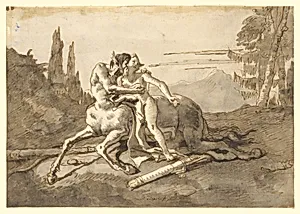
Centaur Embracing Nymph in a Wild Landscape
ca. 1771–91
Medium
Pen and brown and dark brown ink, gray-brown wash
Dimensions
7 3/8 x 10 11/16 in. (18.8 x 27.2 cm)
Classification
Drawings
Department
Robert Lehman Collection
Museum
Metropolitan Museum of Art, New York, NY
Credit
Robert Lehman Collection, 1975
Accession Number
1975.1.498
Rights
Public Domain
Tags
Art Historical Context
In the lush, untamed wilderness of Giovanni Domenico Tiepolo'sCentaur Embracing Nymph in a Wild Landscape* (ca. 1771–91), a mythical centaur tenderly embraces a nymph, evoking the playful sensuality of classical mythology. Created with pen and brown and dark brown ink heightened by gray-brown wash, intimate drawing measures just 7 3/8 x 10 11/16 inches, showcasing Tiepolo's mastery of fluid lines and subtle tonal modeling. As the son of the famed Venetian Rococo master Giovanni Battista Tiepolo, carried forward the family's exuberant style, blending Baroque drama with Rococo lightness in works that often featured fanciful mythological scenes. This late 18th-century sheet, part of the Robert Lehman Collection at The Metropolitan Museum of Art, highlights Tiepolo skill in capturing dynamic movement and emotional intimacy on a small scale. Such drawings were prized in Venice for their spontaneity, serving as both independent artworks and studies for larger frescoes or paintings. The wild landscape framing the lovers adds a layer of romantic escapism, reflecting the era's fascination with antiquity amid the twilight of the Venetian Republic. Visitors will appreciate how Tiepolo's technique—loose, expressive strokes and atmospheric washes—brings ancient myths to life, inviting us to ponder the timeless allure of desire in nature's embrace.
About the Artist
Giovanni Domenico Tiepolo · 1727–1804
Giovanni Domenico Tiepolo (1727-1804) was a Venetian painter, printmaker, and draftsman whose career spanned the twilight of the Rococo era. Born on August 30, 1727, in Venice as the eldest son of the celebrated Giovanni Battista Tiepolo, he worked both in his father's shadow and as a significant independent artist who developed a distinctly earthbound and humanistic vision. Domenico's importance...