
Center table
Unknown Artist
second half 16th century and second half 19th century
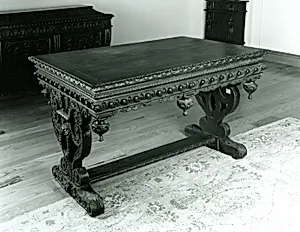
Medium
Walnut, carved.
Dimensions
H. 83.5 cm, W. 132 cm, D. 90.8 cm
Classification
Woodwork-Furniture
Culture
North Italian or French
Department
Robert Lehman Collection
Museum
Metropolitan Museum of Art, New York, NY
Credit
Robert Lehman Collection, 1975
Accession Number
1975.1.1968
Rights
Public Domain
Art Historical Context
This elegant center table, crafted from carved walnut, exemplifies the grandeur of Renaissance-era furniture while revealing a fascinating history of adaptation. Dating to the second half of the 16th century with later modifications in the second half of 19th century, likely originated in North Italy or France, regions renowned for their masterful woodwork during the Renaissance. Measuring 83.5 cm high, 132 cm wide, 90.8 cm deep, its substantial form suggests it served as a focal point in lavish interiors, perhaps hosting grand displays of silver or textiles. The use of walnut—a dense, richly grained hardwood prized for its carvability—allowed artisans to create intricate motifs, showcasing the period's virtuoso techniques in relief carving and joinery. Such tables were status symbols for the elite, blending functionality with artistry amid the opulent courts of Italy and France. The 19th-century interventions highlight evolving conservation practices, preserving the piece's Renaissance spirit for modern appreciation. Now part of the Robert Lehman Collection at The Metropolitan Museum of Art (acquired in 1975), this table invites visitors to ponder the enduring legacy of European craftsmanship, bridging centuries of design evolution.