
Ceramic Jar with Ivory Lid
1820
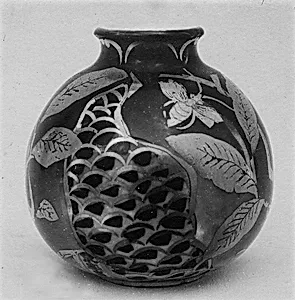
Medium
White porcelain decorated with gold and iron red (Kyoto ware)
Dimensions
H. 2 3/4 in. (7 cm); Diam. 2 3/4 in. (7 cm); Diam. of rim 1 1/8 in. (2.9 cm); Diam. of base 1 1/4 in. (3.2 cm)
Classification
Ceramics
Culture & Period
Japan · Edo period (1615–1868)
Department
Asian Art
Museum
Metropolitan Museum of Art, New York, NY
Credit
Gift of Charles Stewart Smith, 1893
Accession Number
93.3.191a, b
Rights
Public Domain
Tags
Art Historical Context
This delicate Ceramic Jar with Ivory Lid, crafted byiraku Hozen in 1820 during Japan's Edo period (1615–1868), exemplifies the refined artistry of Kyoto ware. Eiraku Hozen, a distinguished lineage of potters, specialized in luxurious porcelain pieces favored by the elite. Measuring just 2¾ inches tall and wide, this petite vessel—likely used for cosmetics, incense, or medicines—reflects the era's emphasis on intimate, everyday luxuries amid a time of peace and urban prosperity. The jar's white porcelain body is adorned with vibrant overglaze enamels in gold and iron red, a hallmark technique of Kyoto ceramics known as kinrande. Delicate motifs of insects and leaves, painted with exquisite precision, evoke the natural world, celebrating fleeting beauty in line with Edo aesthetic ideals like wabi-sabi. The ivory lid adds a tactile contrast, enhancing its portability and elegance. As a gift to the Metropolitan Museum of Art in 1893, this jar highlights the global appreciation for Japanese craftsmanship. Kyoto ware's influence endures, bridging functional pottery with high art and showcasing Japan's mastery of subtle opulence.
About the Artist
Eiraku Hozen · 1795–1854
Eiraku Hozen (1795–1854) was a celebrated Japanese ceramic artist and the sixteenth-generation head of the Nishimura family, a Kyoto dynasty of potters whose work was closely associated with the tastes of the imperial court and the refined aesthetic culture of the ancient capital. Operating under the artistic name Eiraku — a name that would become synonymous with a particular style of elegant, tec...