
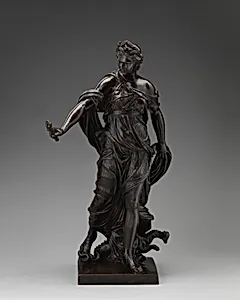
Ceres
1700, after a 1652 model
Medium
Bronze
Dimensions
wt. confirmed: 21 3/4 in., 44.9 lb. (55.2 cm, 20.4 kg)
Classification
Sculpture-Bronze
Culture
French, Paris
Department
European Sculpture and Decorative Arts
Museum
Metropolitan Museum of Art, New York, NY
Credit
Bequest of Mrs. Charles Wrightsman, 2019
Accession Number
2019.283.30
Rights
Public Domain
About this artwork
This sculpture-bronze titled "Ceres" by Michel Anguier dates to 1700, after a 1652 model. Executed in bronze, this work represents French, Paris artistic traditions. The piece demonstrates the technical skill and artistic vision characteristic of its period. The work's presence in a major museum collection attests to its significance in the broader narrative of art history. As part of institutional holdings, it serves both scholarly research and public education, offering insights into the cultu...
Art Historical Context
Behold the elegant bronze sculpture *Ceres by Michel Anguier a masterful evocation of the Roman goddess agriculture and harvest. Created in 1700 from a model dating to 1652, this work hails from the vibrant artistic milieu of Paris during France's grand siècle. Anguier, a prominent French sculptor of the Baroque era, captures Ceres in a poised, classical form that reflects the era's blend of mythological reverence and refined elegance, influenced by the opulent courts of Louis XIV. Crafted in bronze—a medium prized for its durability, rich patina, and ability to convey intricate details through lost-wax casting—this 21¾-inch (55.2 cm) figure weighs a substantial 44.9 lb. (20.4 kg), underscoring the technical prowess required. Bronze sculptures like this were often destined for lavish interiors or gardens, symbolizing abundance and divine favor in French decorative arts. Now gracing the Metropolitan Museum of Art's European Sculpture and Decorative Arts department through the generous bequest of Mrs. Charles Wrightsman in 2019, *Ceres* invites visitors to ponder the cultural ideals of 17th- and 18th-century France: prosperity, artistry, and harmony with nature. A testament to enduring craftsmanship, it bridges scholarly inquiry and aesthetic delight.