
Cezanne Sketchbook
c. 1877/1900
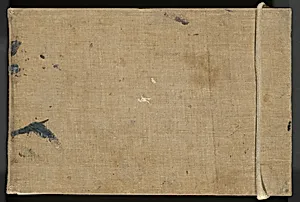
Medium
sketchbook with 71 drawings in graphite, pen and brown ink, and watercolor; the sketchbook contains 46 sheets, several which are blank; the end papers, the recto of the first page, and half the verso of the final page were used for notes, lists, and arithmetical figuring; a draft of a letter to the critic Octave Mirbeau is on page II (recto)
Dimensions
page size: 15.2 x 23.7 cm (6 x 9 5/16 in.)
Classification
Volume
Department
CG-E
Museum
National Gallery of Art, Washington, D.C.
Credit
Collection of Mr. and Mrs. Paul Mellon, in Honor of the 50th Anniversary of the National Gallery of Art
Accession Number
1992.51.9.a-zz
Rights
Public Domain
Art Historical Context
Paul Cézanne’s sketchbook, dating from 1877 to 1900, offers a rare glimpse into the working life of one of the most influential artists of the late nineteenth century. Measuring just 15.2 by 23.7 centimeters, this portable volume contains 71 drawings executed in graphite, pen and brown ink, and watercolor across 46 sheets. Several pages remain blank, while the endpapers and margins hold practical notes, lists, and arithmetic calculations, revealing how the artist used the book as both a creative and everyday companion. Among its most intriguing features is a draft letter to the critic Octave Mirbeau on page II, which connects the sketchbook to the lively artistic debates of its time. Cézanne’s choice of mixed media on these small pages demonstrates his experimental approach, allowing him to explore line, tone, and color in quick, intimate studies. Such sketchbooks were essential tools for artists of his generation, capturing fleeting observations that often informed larger paintings. Acquired by the National Gallery of Art through the generosity of Mr. and Mrs. Paul Mellon, this volume stands as a valuable record of Cézanne’s creative process. It invites visitors to appreciate not only the finished masterpieces but also the private, iterative work that shaped modern art.
About the Artist
Paul Cezanne · 1839–1906
Paul Cézanne (1839–1906), born in Aix-en-Provence to a prosperous banker father, Louis-Auguste, and mother Anne-Elisabeth-Honorine Aubert, grew up in a bourgeois family that later acquired the Jas de Bouffan estate, where he painted his earliest murals. As a youth, he formed the inseparable trio "Les Trois Inséparables" with schoolmates Émile Zola and Baptistin Baille. Despite his father's wishes ...