
Chain
Unknown Artist
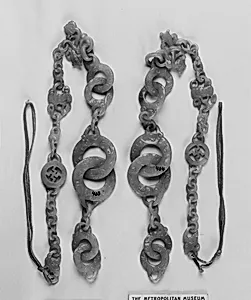
Medium
Nephrite, light sage-green
Dimensions
Each H. 19 in. (48.3 cm)
Classification
Jade
Culture & Period
China · Ming dynasty (1368–1644)
Department
Asian Art
Museum
Metropolitan Museum of Art, New York, NY
Credit
Gift of Heber R. Bishop, 1902
Accession Number
02.18.404
Rights
Public Domain
Art Historical Context
Behold the exquisite *Chain*, a masterful example of Ming dynasty (1368–1644) jade craftsmanship from China, now gracing the Metropolitan Museum of's Asian Art collection.ved from light sage-green nephrite—a variety of jade prized for its toughness and luminous translucency—this artwork consists of interlocking links, each standing an impressive 19 inches (.3 cm) high. Donated in 1902 by collector Heber R. Bishop it exemplifies the era's technical virtuosity, where artisans transformed unyielding stone into fluid, chain-like forms through meticulous carving and polishing. In Ming China, jade held profound cultural significance, symbolizing purity, immortality, and imperial authority. Nephrite, sourced from distant mines, was reserved for elite objects, from ritual pendants to architectural ornaments. This chain likely served ceremonial or decorative purposes, its pale green hue evoking misty mountains and evoking harmony with nature—a core tenet of Chinese aesthetics. The sheer scale of each link underscores the sculptors' patience, as they pierced and hollowed the dense material without modern tools, achieving seamless interconnections that mimic metal yet retain jade's organic warmth. Visitors are often captivated by how light dances across its surface, revealing subtle veins and a velvety glow. A testament to anonymous genius, *Chain* invites us to marvel at Ming innovation, bridging ancient reverence for jade with timeless artistry.