
Chair Cover
Empire period, c. 1810
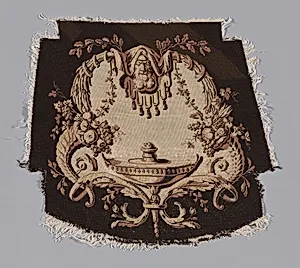
Medium
Linen and silk, plain weave; embroidered with silk in back and tent stitches
Dimensions
55.7 × 56.5 cm (22 × 22 1/4 in.)
Classification
textile
Department
Textiles
Museum
Art Institute of Chicago
Accession Number
100219
Rights
Public Domain
Art Historical Context
This exquisite *Chair Cover* from the period, around 1810, hails from a time when Napoleon's France revived the grandeur of ancient Rome and Greece in everyday luxury. The Empire style blended neoclassical motifs—like laurels, urns, and imperial eagles—with opulent domestic furnishings, turning homes into statements of status and patriotism. Measuring a tidy 22 × 22¼ inches, this square textile was likely designed to adorn a fashionable chair in a salon or boudoir, protecting and beautifying furniture amid the era's social gatherings. Crafted from a plain weave of linen and silk, the cover showcases skilled embroidery in silk threads using back and tent stitches. Back stitch creates bold, continuous lines for outlines, while tent stitch—also known as petit point—forms a fine, even texture ideal for durable upholstery, resembling woven canvas from afar. These techniques highlight the anonymous artisan's precision, probably a woman practicing the domestic arts so prized in early 19th-century Europe, where embroidery was both a creative outlet and a marker of refinement. Today, housed in the Art Institute of Chicago's Textiles Department, this piece offers a tactile glimpse into Empire-era life, revealing how textiles wove together fashion, politics, and craftsmanship in Napoleonic households.
About the Artist
Unknown
The artist designated as "Unknown" in our virtual museum's collection exemplifies a poignant chapter in art history: creators whose identities have faded into obscurity despite the enduring power of their work. With only one known artwork attributed to them in our holdings, this figure represents countless anonymous hands that shaped visual culture across centuries. Museums worldwide, including th...