
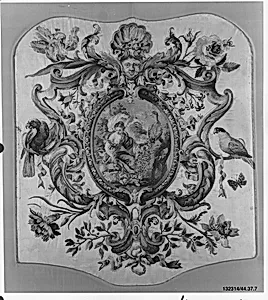
Chair panel
early 18th century
Medium
Silk on silk
Dimensions
H. 25 x W. 21 1/2 inches (63.5 x 54.6 cm)
Classification
Textiles-Embroidered
Culture
French
Department
European Sculpture and Decorative Arts
Museum
Metropolitan Museum of Art, New York, NY
Credit
Rogers Fund, 1944
Accession Number
44.37.7
Rights
Public Domain
Tags
Art Historical Context
This exquisite chair panel, embroidered by Daniel Marot the Elder in the early 18th century exemplifies the opulent Baroque style that defined French decorative arts during the reign of Louis XIV and beyond. Marot, a Huguenot designer who fled France for the Netherlands and later England, was renowned for his intricate designs blending architectural grandeur with naturalistic motifs. Created as upholstery for high-status furniture, this silk-on-silk panel (25 x 21½ inches) would have adorned a chair in a lavish salon, showcasing the era's emphasis on luxury and symmetry. The embroidery technique—silk threads meticulously stitched onto a silk ground—highlights the masterful craftsmanship of French ateliers. Delicate vignettes of birds, flowers, women's faces, and floral garlands evoke the playful elegance of the Régence period, transitioning from Louis XIV's heavy grandeur to lighter Rococo influences. These motifs not only served aesthetic purposes but symbolized abundance, femininity, and the natural world, ideal for intimate domestic spaces. Acquired through the Rogers Fund in 1944 and now in the Metropolitan Museum of Art's European Sculpture and Decorative Arts collection, this panel offers a glimpse into the refined tastes of Europe's aristocracy. It underscores textiles' pivotal role in 18th-century interiors, where embroidery rivaled painting in prestige and technical virtuosity.