
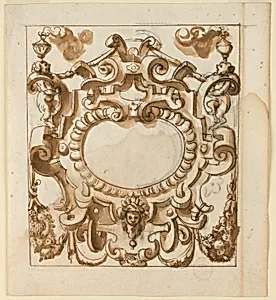
Strapwork Design
early 17th century
Medium
ornament
Classification
ornament
Department
Smithsonian Collection
Museum
Smithsonian American Art Museum
Credit
Museum purchase through gift of various donors
Accession Number
1901-39-1754
Rights
Public Domain
About this artwork
Research in Progress
Art Historical Context
### Strapwork Design This intricate *Strapwork Design* from the early 17th century exemplifies the ornate ornamental motifs that flourished during the transition from Mannerism to the Baroque era. Strapwork, characterized by scrolling, interlocking bands resembling folded leather straps, was a hallmark of European decorative arts, often appearing in architecture, prints, metalwork, and textiles. As an anonymous ornament in the Smithsonian American Art Museum's collection, it reflects the era's fascination with elaborate patterns that conveyed luxury and sophistication. In the context of early American art, such designs likely influenced colonial craftsmen adapting European styles for furniture, wall panels, and silverwork. Acquired through museum purchase with gifts from various donors, this piece highlights the Smithsonian's commitment to preserving foundational decorative elements that shaped American visual culture. Though research is ongoing, it offers a window into the technical precision required for these motifs, achieved through engraving or drawing techniques that allowed repetition across media. Visitors will appreciate how this modest ornament captures the playful complexity of 17th-century design, bridging Old World elegance with New World innovation. (178 words)
About the Artist
Unknown
The artist designated as "Unknown" in our virtual museum's collection exemplifies a poignant chapter in art history: creators whose identities have faded into obscurity despite the enduring power of their work. With only one known artwork attributed to them in our holdings, this figure represents countless anonymous hands that shaped visual culture across centuries. Museums worldwide, including th...