
Chalice
Unknown Artist
ca. 1400
Medium
Silver-gilt, silver, and basse taille enamel
Dimensions
Overall: H:8 1/8 x W:6 5/8 in. (20.6 x 16.8 cm) cup only: 2 15/16 x 4 3/16 in. (7.5 x 10.6 cm)
Classification
Metalwork-Silver
Culture
Catalan
Department
The Cloisters
Museum
Metropolitan Museum of Art, New York, NY
Credit
The Cloisters Collection, 1963
Accession Number
63.67
Rights
Public Domain
Tags
Art Historical Context
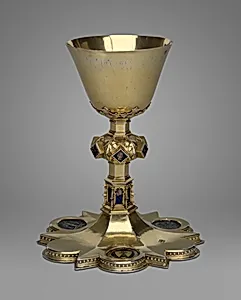
This exquisite chalice, crafted around 1400 by an unknown Catalan artist, exemplifies the opulent metalwork of late medieval Europe. As a liturgical vessel used to hold the wine during the Eucharist, it reflects the deep religious devotion of the Gothic era, when such objects were both functional and profoundly symbolic. Hailing from Catalonia—a vibrant center of artistic innovation in the Crown of Aragon—this piece entered The Cloisters Collection in 1963, enriching the Metropolitan Museum of Art's treasury of medieval treasures. The chalice's luxurious materials—silver-gilt, silver, and basse-taille enamel—highlight masterful craftsmanship. Basse-taille, a refined enameling technique, involves engraving low-relief designs into the metal base and layering translucent enamel over them, allowing light to play across the scenes and create a glowing, jewel-like effect. Its decorations feature key Christian motifs: the Annunciation, evoking the angel Gabriel's message to Mary; the Crucifixion, central to salvation theology; and a coat of arms, likely signifying noble patronage that funded such works. Standing just over 8 inches tall, this chalice invites close contemplation of its intricate details, bridging artistry and faith. It underscores Catalonia's role in producing high-status religious artifacts, blending technical virtuosity with spiritual narrative for worshippers of the time.