
Chalice cover
Unknown Artist
late 15th century
Medium
Silk and metal thread embroidery on a foundation of silk satin backed with linen plain weave
Dimensions
16 3/4 × 17 in. (42.5 × 43.2 cm) Mount (Anticipated dimension when mounted to display board:): 19 × 18 in. (48.3 × 45.7 cm)
Classification
Textiles-Embroidered
Culture
Georgian, Abkhasia
Department
European Sculpture and Decorative Arts
Museum
Metropolitan Museum of Art, New York, NY
Credit
Gift of J. Pierpont Morgan, 1917
Accession Number
17.190.128
Rights
Public Domain
Tags
Art Historical Context
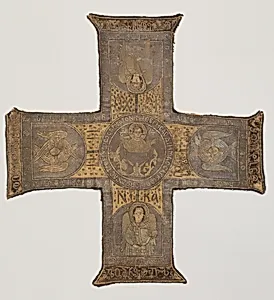
This exquisite chalice cover, crafted in late 15th-century Abkhazia within the Georgian cultural sphere, served as a liturgical veil to drape over the chalice during Christian Eucharistic rites. Hailing from a region with deep roots in Eastern Orthodox Christianity—Georgia being one of the world's earliest Christian nations since the 4th century—this textile reflects the era's devotion to sacred rituals amid the turbulent medieval Caucasus. Masterfully embroidered with silk and shimmering metal threads on a luxurious silk satin foundation, backed by linen for durability, the cover measures about 17 inches square. The intricate needlework likely features angels, Christ, and crosses, evoking heavenly protection and divine presence—hallmarks of Orthodox iconography influenced by Byzantine traditions. Such opulent techniques elevated everyday worship into a sensory feast of light and color, showcasing the anonymous artisan's skill in blending fine materials for ecclesiastical splendor. A gift to the Metropolitan Museum of Art from J. Pierpont Morgan in 1917, this rare survivor highlights Abkhazian textile artistry's role in preserving faith through beauty, offering visitors a tangible link to medieval spirituality.