
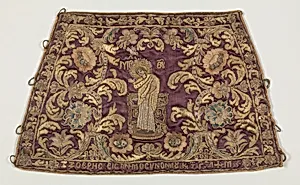
Liturgical cuff (Epimanikion)
Unknown Artist
1740
Medium
Silk, metal thread, and metal wire embroidery on a foundation of silk satin
Dimensions
9 3/4 × 5 3/4 in. (24.8 × 14.6 cm)
Classification
Textiles-Embroidered
Culture
Greek
Department
European Sculpture and Decorative Arts
Museum
Metropolitan Museum of Art, New York, NY
Credit
Gift of George Blumenthal, 1941
Accession Number
41.100.234
Rights
Public Domain
Tags
Art Historical Context
This exquisite liturgical cuff, known as an *epimanikion*, hails from Greece in 1740 and served as part of Orthodox Christian vestments worn by during divine services. Measuring just 9¾ × 5¾ inches, this small yet ornate accessory adorns the wrist, featuring a finely embroidered scene of the Annunciation—the biblical moment when the Archangel Gabriel announces to the Virgin Mary that she will bear the Son God. Such motifs underscore the deep spiritual symbolism in Eastern Orthodox liturgy, blending reverence with artistic splendor. Crafted from silk satin foundation and embellished with silk threads, shimmering metal threads, and delicate metal wire, the embroidery showcases masterful techniques typical of 18th-century Greek textile arts. These luxurious materials elevated the cuff's role in sacred rituals, catching candlelight to symbolize divine radiance amid ceremonies. The intricate stitching reflects the era's high craftsmanship in ecclesiastical textiles, where opulence honored the holy. Now housed in the Metropolitan Museum of Art's Department of European Sculpture and Decorative Arts—thanks to a 1941 gift from George Blumenthal—this cuff offers a window into Greek Orthodox devotion and the enduring artistry of religious embroidery, reminding visitors of faith's tangible beauty.