
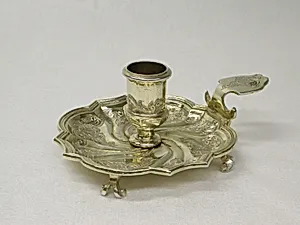
Chamber candlestick
ca. 1743–45
Medium
Silver gilt
Dimensions
Overall: H. 1 7/8 x W. 4 3/4 x D. 3 3/4 in. (4.8 x 12.1 x 9.5 cm)
Classification
Metalwork-Silver
Culture
German, Augsburg
Department
European Sculpture and Decorative Arts
Museum
Metropolitan Museum of Art, New York, NY
Credit
Purchase, Anna-Maria and Stephen Kellen Foundation Gift, in memory of Stephen M. Kellen, 2005
Accession Number
2005.364.26
Rights
Public Domain
Art Historical Context
This exquisite chamber candlestick, crafted by Drentwett IV 1743–45, exemplifies the pinnacle of Augsburg's renowned silversmithing tradition.ailing from a distinguished family of German goldsmiths, Drentwett specialized in intricate metalwork during the Rococo era, a time when opulent, asymmetrical designs celebrated playful elegance over Baroque grandeur. Made of silver gilt—silver coated with a thin layer of gold—this petite piece (just under 2 inches tall) was designed for intimate bedside use, providing soft illumination in private chambers of affluent 18th-century homes. Augsburg, in southern Germany, was Europe's silver capital in the 1700s, producing luxurious objects for nobility and the emerging bourgeois elite. Drentwett's technique of mercury gilding created a radiant, durable finish that enhanced the candlestick's delicate chasing and engraving, likely featuring floral motifs or scrolls typical of the period. Such items blended functionality with artistry, turning everyday lighting into status symbols. Today, this candlestick graces The Metropolitan Museum of Art's European Sculpture and Decorative Arts collection, a gift honoring Stephen M. Kellen. It invites us to appreciate how craftsmanship illuminated domestic life, bridging utility and beauty in the Age of Enlightenment.