
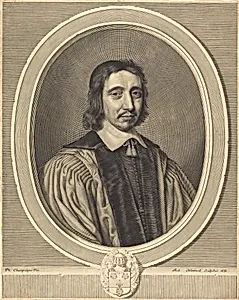
Charles Benoise
Medium
engraving
Classification
Department
CG-E
Museum
National Gallery of Art, Washington, D.C.
Credit
Rosenwald Collection
Accession Number
1943.3.6647
Rights
Public Domain
Art Historical Context
This 1651 engraving by Robert Nanteuil after Philippe de Champaigne portrays Charles Benoise, capturing the refined portraiture popular in mid-seventeenth-century France. Nanteuil, one of the period’s foremost printmakers, specialized in translating painted likenesses into detailed engravings that reached a wider audience than original canvases could. Working after Champaigne, a leading painter known for his clear, classical compositions, Nanteuil preserved the sitter’s dignified presence while showcasing the crisp lines and subtle tonal modeling that engraving allowed. Prints like this played a vital cultural role, circulating images of notable individuals across Europe and preserving them for posterity. The medium’s precision and reproducibility made it especially valuable during the reign of Louis XIV, when formal portraits reinforced social and political identities. Today, this work resides in the Rosenwald Collection at the National Gallery of Art, where it offers visitors a window into both the technical artistry of French engraving and the era’s fascination with commemorative imagery.