
Chasse
Unknown Artist
13th century
Medium
Copper-gilt, champlevé enamel
Dimensions
Overall: 7 1/16 x 8 1/16 x 3 1/16in. (18 x 20.4 x 7.7cm)
Classification
Enamels-Champlevé
Culture
French
Department
Medieval Art
Museum
Metropolitan Museum of Art, New York, NY
Credit
Gift of J. Pierpont Morgan, 1917
Accession Number
17.190.342
Rights
Public Domain
Tags
Art Historical Context
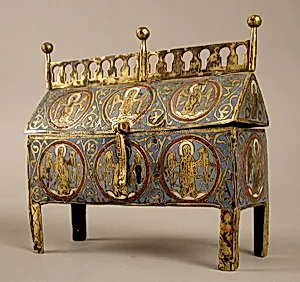
Step into the luminous world of 13th French medieval art with this exquisite *Chasse*, a reliquary crafted by an unknown artist around the 1200s. Shaped like a miniature Gothic church—complete with pitched roof, gables, and architectural details—this copper-gilt object served a sacred purpose: safeguarding holy relics, such as fragments of saints' bones, venerated by pilgrims and clergy alike. Measuring just over 7 by 8 inches, its compact form made it portable for processions or private devotion, embodying the era's deep fusion of faith, artistry, and devotion during the High Middle Ages. The chasse's brilliance stems from its masterful champlevé enamel technique, a hallmark of Limoges workshops in France. Artisans carved troughs into the gilded copper base, filled them with powdered glass enamels in vibrant blues, reds, and whites, then fired the piece in a kiln to fuse the colors permanently. This labor-intensive method created durable, jewel-like surfaces that glowed with otherworldly light, symbolizing divine radiance. Gold gilding added opulence, elevating the reliquary from functional container to a devotional treasure. Now housed in the Metropolitan Museum of Art's Medieval Art department—thanks to a 1917 gift from J. Pierpont Morgan—this chasse invites us to ponder medieval spirituality. It whispers of a time when art bridged earth and heaven, reminding visitors of the enduring allure of Gothic craftsmanship.