
Chasse
Unknown Artist
13th century
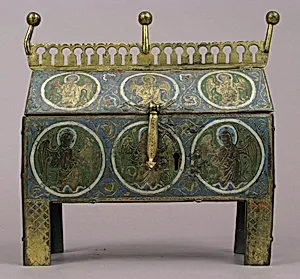
Medium
Champlevé enamel, copper-gilt
Dimensions
Overall: 9 1/16 x 9 5/8 x 4 1/4 in. (23 x 24.4 x 10.8 cm)
Classification
Enamels-Champlevé
Culture
French
Department
Medieval Art
Museum
Metropolitan Museum of Art, New York, NY
Credit
Gift of J. Pierpont Morgan, 1917
Accession Number
17.190.335
Rights
Public Domain
Art Historical Context
Behold the exquisite *Chasse*, a 13th-century French reliquary box crafted by an unknown artist, now gracing the Medieval Art collection at the Metropolitan Museum of Art. This treasure, measuring just over9 by 9 inches and standing 4 inches tall, was designed to house sacred relics—fragments of saints' bones holy objects venerated in medieval Christianity. Donated in 1917 by the financier J. Pierpont, it exemplifies the devotional artistry of Gothic-era France, likely from the renowned workshops of Limoges. The chasse's brilliance comes from its champlevé enamel technique on a copper-gilt base, a hallmark of 12th- and 13th-century metalwork. Artisans chiseled troughs into the metal, filled them with ground glass enamels in vibrant blues, reds, and golds, then fired the piece to fuse the colors permanently. This labor-intensive method allowed for intricate scenes from biblical stories or saints' lives, glowing with otherworldly light that drew worshippers closer in dimly lit churches. In medieval culture, such chasses were processional powerhouses, carried in rituals to invoke miracles and community faith. Its survival speaks to the era's masterful fusion of technology, piety, and beauty, inviting us today to ponder the spiritual fervor that birthed these jeweled chests.