
Chasuble
Unknown Artist
mid-17th century
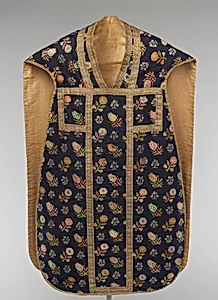
Medium
Plain-weave silk, brocaded
Dimensions
Neck to hem: L. 47 x W. 30 1/2 inches (119.4 x 77.5 cm)
Classification
Textiles-Woven|Textiles-Ecclesiastical
Culture
Italian, probably Venice
Department
European Sculpture and Decorative Arts
Museum
Metropolitan Museum of Art, New York, NY
Credit
Gift of Dr. Richard J. Cross, William R. Cross Jr. and Dr. Thomas N. Cross, in memory of their mother, Mrs. William Redmond Cross, 1981
Accession Number
1981.85.3
Rights
Public Domain
Tags
Art Historical Context
This exquisite chasuble, a liturgical vestment worn by Catholic priests during Mass, hails from mid-17th-century Italy, likely Venice—a renowned hub for luxurious silk production during the Baroque era. Measuring an impressive 47 inches from neck to hem, it crafted from plain-weave silk,caded with intricate patterns, including floral motifs that evoke the era's love for opulent decoration. These ecclesiastical textiles were not mere garments but symbols of divine splendor, adorning clergy in grand cathedrals. The brocading technique, where supplementary weft threads create raised, shimmering designs against the silk ground, showcases the masterful weaving skills of Venetian artisans. Venice's silk industry thrived on innovative looms and imported dyes, producing fabrics that rivaled paintings in their vividness and detail. This chasuble reflects the Counter-Reformation's emphasis on sensory richness in worship, blending artistry with spirituality. A generous gift to the Metropolitan Museum of Art in 1981 from the Cross family, this rare survivor offers a tactile glimpse into 17th-century religious life, highlighting how textiles bridged fashion, faith, and fine craft.