
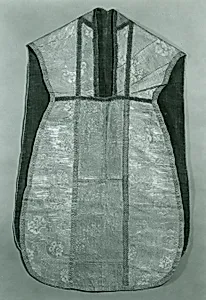
Chasuble with Orphreys
Unknown Artist
16th century
Medium
Satin; silk; metal; linen
Dimensions
From center back neck: 40 1/4 x 27 1/8 in. (102.2 x 68.9 cm)
Classification
Textiles-Ecclesiastical
Culture
Italian
Department
Robert Lehman Collection
Museum
Metropolitan Museum of Art, New York, NY
Credit
Robert Lehman Collection, 1975
Accession Number
1975.1.1795
Rights
Public Domain
Art Historical Context
Step into the opulent world of Renaissance ecclesiastical vestments with this stunning 16th-century *Chasuble with Orph* from Italy, now housed in the Metropolitan Museum of's Robert Lehman Collection. chasuble is the outer liturgical garment worn by priests during Catholic Mass, symbolizing charity and the yoke of Christ. Measuring 40 1/4 x 27 1/8 inches from the center neck, this piece exemplifies the grandeur of sacred attire designed to inspire awe in worshippers. Crafted from shimmering satin and silk, with intricate metal threads and a linen lining, the chasuble features ornate orphreys—decorative bands typically embroidered along the edges and front. These luxurious materials, often imported and embellished with gold or silver, highlight the advanced textile techniques of the Italian Renaissance, where weaving, embroidery, and metalwork combined to create wearable masterpieces that rivaled paintings in splendor. In 16th-century Italy, such vestments were commissions of wealthy patrons or churches, reflecting the era's fusion of art, faith, and craftsmanship. This chasuble not only served a functional role in liturgy but also embodied cultural devotion, showcasing how textiles became canvases for spiritual expression amid the Counter-Reformation's emphasis on visual splendor. A true gem of the Robert Lehman Collection since 1975, it invites us to appreciate the hidden artistry of sacred fashion.