
Chef de piece
ca. 1795
Medium
printed, dyed & painted textiles
Classification
printed, dyed & painted textiles
Department
Smithsonian Collection
Museum
Smithsonian American Art Museum
Credit
Gift of Cora Ginsburg
Accession Number
1994-80-20
Rights
Public Domain
About this artwork
Research in Progress
Art Historical Context
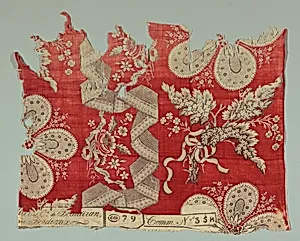
**Chef de Pièce** *J.P. Meiller et Cie., ca. 1795* Printed, dyed, and painted textiles Smithsonian American Art Museum into the elegant world of late 18th-century French with *Chef de Pièce*, masterful example from J.P. Meiller et., a firm active from 1792 1826. Produced 1795, this exemplifies the height of printed cotton innovation during the French Revolutionary era. "Chef de pièce," meaning "head of the piece," refers to the principal panel in a set of furnishing fabrics, often designed to anchor larger ensembles for curtains, upholstery, or bed hangings. Gifted by noted textile collector Cora Ginsburg, it now graces the Smithsonian American Art Museum's collection. The medium—printed, dyed, and painted textiles—highlights advanced techniques pioneered in France's textile hubs like Jouy-en-Josas. Artisans used wooden blocks or early copperplate printing to apply vibrant dyes, then hand-painted details for depth and realism. This labor-intensive process made such fabrics luxurious status symbols, blending affordability with artistry amid post-Revolution economic shifts toward mass production. Though research continues, *Chef de Pièce* captures a pivotal moment when textiles became democratic art forms, influencing global design. Imagine it adorning a neoclassical salon, its patterns evoking pastoral idylls or revolutionary motifs—testaments to craftsmanship that bridged utility and beauty. (198 words)