
Chef de piece
1790–99
Classification
printed, dyed & painted textiles
Department
Smithsonian Collection
Museum
Smithsonian American Art Museum
Credit
Gift of Cora Ginsburg
Accession Number
1994-80-36
Rights
Public Domain
About this artwork
Research in Progress
Art Historical Context
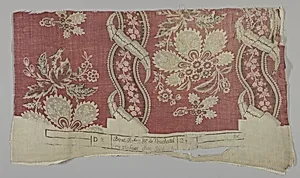
"Chef de pièce" by Robert H.et, created between 1790 and 1799, us into the vibrant world of late18th-century textiles. Housed in the Smithsonian American Art Museum as part of the Smithsonian Collection, this artwork was generously gifted by textile collector Cora Ginsburg. as a printed, dyed, and painted, its medium reflects the sophisticated handcraft techniques of the era, where fabrics were not just functional but artistic expressions of color, pattern, and innovation. The title "Chef de pièce"—French for "head of the piece"—typically denotes a master sample or strike-off in textile production, used to showcase design motifs before full-scale manufacturing. Bovet's work exemplifies the period's advancements in multi-technique printing and dyeing, blending artistry with emerging industrial processes. During the 1790s, amid the young American republic's growth and transatlantic trade, such textiles adorned homes, clothing, and furnishings, symbolizing status and cultural exchange. Though research continues to uncover more about Bovet and this piece, it stands as a testament to the unsung artistry of textile makers. Visitors can appreciate how these fabrics wove together beauty, utility, and history, bridging everyday life with museum-worthy legacy.