
Chenet
Unknown Artist
second half of 19th century
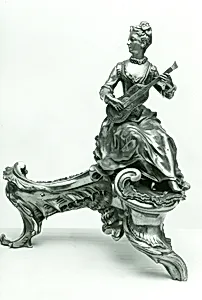
Medium
Gilt bronze, cast in two parts.
Dimensions
H. 41.3 cm.
Classification
Metalwork-Bronze
Culture
French, Paris
Department
Robert Lehman Collection
Museum
Metropolitan Museum of Art, New York, NY
Credit
Robert Lehman Collection, 1975
Accession Number
1975.1.1478
Rights
Public Domain
Tags
Art Historical Context
Nestled in the Robert Lehman Collection at The Metropolitan Museum of Art,Chenet* is a example of 19th-century French gilt bronze metalwork from Paris. Standing at 41.3 cm high, this decorative andiron—known as a *chenet* in French cast in two parts, showcasing the era's masterful foundry techniques. Its gleaming gold surface and elegant form highlight the opulence of Second Empire and Belle Époque interiors, where such pieces supported fire grates while doubling as sculptural ornaments. The motifs of women and guitars evoke the romantic spirit of the time, blending musical reverie with feminine grace—a nod to the bohemian culture popularized in Parisian salons and cafés. Gilt bronze, a favored medium for luxury furnishings, involved intricate lost-wax casting followed by mercury gilding, ensuring durability and lavish shine. Though by an unknown artist, its craftsmanship reflects the high standards of Parisian ateliers, which supplied Europe's elite. This *chenet* offers a glimpse into everyday luxury, transforming functional hearth accessories into artistic statements. Acquired in 1975, it invites visitors to appreciate how 19th-century designers infused domestic objects with poetic charm.