
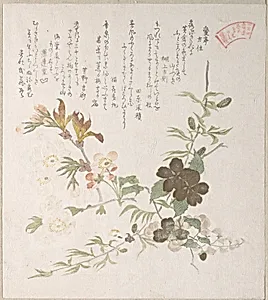
Cherry Blossoms and Yamabuki Flowers
19th century
Medium
Part of an album of woodblock prints (surimono); ink and color on paper
Dimensions
8 3/16 x 7 5/16 in. (20.8 x 18.6 cm)
Classification
Prints
Culture & Period
Japan · Edo period (1615–1868)
Department
Asian Art
Museum
Metropolitan Museum of Art, New York, NY
Credit
H. O. Havemeyer Collection, Bequest of Mrs. H. O. Havemeyer, 1929
Accession Number
JP2236
Rights
Public Domain
Tags
Art Historical Context
Nestled within the delicate world of Edo-period Japan, *Cherry Blossoms and Yamab Flowers* by Kubo Shunman captures the fleeting beauty of spring. Created in the 19th century as part a surimono album—a luxurious genre of woodblock prints privately commissioned for special occasions like New Year's—this intimate work measures just 8 3/16 x 7 5/16 inches. Shunman, a master ofkiyo-e, blends ink and vibrant colors on paper to evoke nature's ephemeral charm, with cherry blossoms symbolizing transience (*mono no aware*) and golden yamabuki flowers adding poetic contrast. Surimono like this one were artisanal treasures, often featuring embossed textures and mica for a shimmering effect, though here the focus shines on precise composition and seasonal harmony. Produced during the Edo period (1615–1868), when woodblock printing flourished in urban culture, these prints celebrated poetry and nature amid Japan's isolationist prosperity. Shunman's style reflects ukiyo-e's emphasis on everyday elegance, inviting viewers to savor impermanence. Today, this gem from the H. O. Havemeyer Collection graces the Metropolitan Museum of Art's Asian Art department, a testament to cross-cultural appreciation. Pause before its leaves and blooms—feel the whisper of sakura petals falling.
About the Artist
Kubo Shunman · 1757–1820
Japanese, 1757–1820