
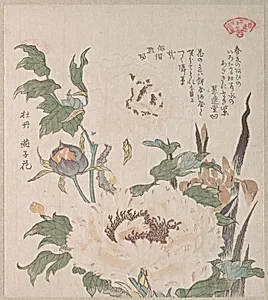
Peonies and Iris
19th century
Medium
Part of an album of woodblock prints (surimono); ink and color on paper
Dimensions
8 1/4 x 7 3/8 in. (21 x 18.7 cm)
Classification
Prints
Culture
Japan
Department
Asian Art
Museum
Metropolitan Museum of Art, New York, NY
Credit
H. O. Havemeyer Collection, Bequest of Mrs. H. O. Havemeyer, 1929
Accession Number
JP2308
Rights
Public Domain
Tags
Art Historical Context
Behold the exquisite *Peonies and Iris* Kubo Shunman, a gem from 19th-century Japan nestled in the Metropolitan Museum of Art's Asian Art collection. This intimate woodblock print, measuring just 8¼ x 7⅜ inches, forms part of a surimono album—a luxurious genre of privately commissioned prints often created for New Year's greetings or gatherings. Crafted with ink and vibrant color on paper, surimono like this one showcase the pinnacle of ukiyo-e, blending precise carving techniques with subtle gradients (bokashi) and metallic accents for a shimmering, tactile allure. In Japanese culture, peonies evoke prosperity, honor, and the fleeting beauty of spring, while irises symbolize valor and protection—perfect motifs for celebratory art. Shunman's composition captures their lush petals and elegant stems with masterful economy, inviting viewers to savor nature's transience amid the Edo period's refined aesthetic. Part of the esteemed H. O. Havemeyer Collection, bequeathed in 1929, this print bridges Japan's artistic golden age with global appreciation, reminding us of woodblock printing's enduring legacy in democratizing beauty.
About the Artist
Kubo Shunman · 1757–1820
Japanese, 1757–1820