
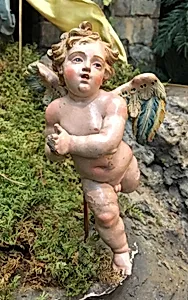
Cherub
Unknown Artist
second half 18th century
Medium
Polychromed terracotta
Dimensions
H. 6 1/8 in. (15.6 cm.)
Classification
Crèche
Culture
Italian, Naples
Department
European Sculpture and Decorative Arts
Museum
Metropolitan Museum of Art, New York, NY
Credit
Gift of Loretta Hines Howard, 1964
Accession Number
64.164.64
Rights
Public Domain
Art Historical Context
This delightful *Cherub*, crafted in polychromed terracotta by an unknown Neapolitan artist in the second half of the18th century, captures whimsical charm of heavenly messengers in Italy's vibrant nativity traditions. Standing just 6 1/8 inches (15.6 cm) tall, the figure exemplifies the exquisite detail of *crèche* sculptures—small, lifelike statues designed for elaborate Christmas scenes known as *presepi*. medium of terracotta, fired clay coated in vibrant polychrome paints, allowed artisans to achieve realistic flesh tones, flowing garments, and expressive faces, bringing biblical stories to vivid life in homes and churches. Hailing from Naples, a hub of Baroque artistry, this cherub reflects the city's 18th-century devotion to theatrical, emotionally charged religious art. Neapolitan workshops produced thousands of such figures annually, blending folk craftsmanship with sophisticated modeling techniques influenced by sculptors like Giuseppe Sanmartino. Often grouped around the Holy Family, cherubs like this one added a touch of divine playfulness, symbolizing innocence and joy amid the Nativity. A generous gift to the Metropolitan Museum of Art from Loretta Hines Howard in 1964, this piece invites visitors to appreciate the anonymous genius behind Naples' enduring crèche legacy, where everyday devotion met masterful artistry.