
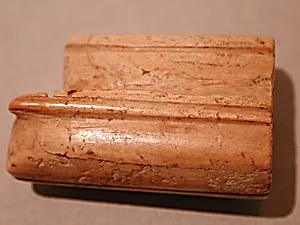
Chess Piece, King
Unknown Artist
9th–12th century
Medium
Ivory; carved
Dimensions
H. 1 5/16 in. (3.3 cm) W. 13/16 in. (2 cm)
Classification
Gaming pieces
Department
Islamic Art
Museum
Metropolitan Museum of Art, New York, NY
Credit
Rogers Fund, 1940
Accession Number
40.170.151
Rights
Public Domain
Tags
Art Historical Context
This exquisite ivory chess king, carved by an unknown artist between the 9th and 12th centuries, hails from the Islamic world during a golden age of cultural and intellectual flourishing. Standing just 1 5/16 inches (3.3 cm) tall 13/16 inches (2 cm) wide, its petite scale suggests it was designed for portable gaming sets, allowing players to enjoy matches on the go—perfect for travelers, scholars, or courtiers. Crafted from elephant ivory, a prized luxury material, the piece exemplifies the fine carving techniques of the era, where artisans delicately shaped dense tusks into precise, functional forms using simple tools like knives and abrasives. Chess, known as *shatranj* in the Islamic tradition, originated in India and evolved significantly after reaching Persia and the Abbasid Caliphate. This king—symbolizing the *shah* or ruler—holds immense cultural weight as a gaming piece from a game that sharpened strategic thinking and was beloved by intellectuals like poet al-Khwarizmi. Unlike later European sets with figurative knights and bishops, Islamic chess pieces were often abstracted to align with artistic conventions, emphasizing geometry and symbolism over realism. Acquired through the Rogers Fund in 1940, this artifact at the Metropolitan Museum of Art offers a tangible glimpse into medieval leisure and the global spread of chess.