
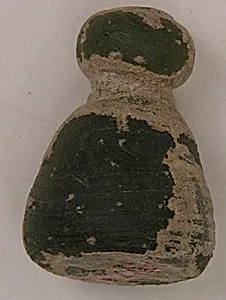
Chess Piece, Pawn
Unknown Artist
8th–11th century
Medium
Glass
Dimensions
H. 1 5/16 in. (3.3 cm)
Classification
Gaming pieces
Department
Islamic Art
Museum
Metropolitan Museum of Art, New York, NY
Credit
Pfeiffer Fund, 1972
Accession Number
1972.9.1
Rights
Public Domain
Tags
Art Historical Context
This delicate glass pawn, crafted by an unknown artist between the8th and 11th centuries, hails from the vibrant world of early Islamic art. Dating to the Islamic Golden Age, when chess—known as *shatranj* in Persian and Arabic cultures—flourished across the Abbasid Caliphate, this tiny gaming piece (just 1 5/16 inches tall) exemplifies the period's love for intellectual pastimes. Originating from ancient Indian chaturanga, chess spread through Persia into the Islamic world, where it symbolized strategy and wit, often played in courts and scholarly circles. Made of glass, a medium prized for its clarity and versatility in Islamic workshops, the pawn likely employed molding techniques common in Syrian or Mesopotamian glass production. These pieces avoided figurative forms, adhering to aniconic traditions that favored geometric abstraction, making them both functional and aesthetically refined. As a lowly pawn—the foot soldier of the board—it represents the game's democratic thrill, where humble pieces could promote to queens. Acquired through the Pfeiffer Fund in 1972, this artifact at the Metropolitan Museum of Art offers a glimpse into everyday luxury and cultural exchange along medieval trade routes, reminding us how games bridged empires and minds.