
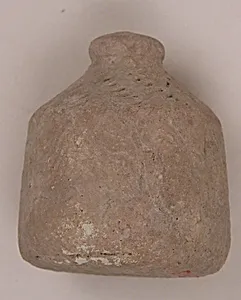
Chess Piece, Pawn
Unknown Artist
8th–11th century
Medium
Earthenware; unglazed
Dimensions
H. 1 3/8 in. (3.5 cm)
Classification
Gaming pieces
Department
Islamic Art
Museum
Metropolitan Museum of Art, New York, NY
Credit
Pfeiffer Fund, 1972
Accession Number
1972.9.43
Rights
Public Domain
Tags
Art Historical Context
This modest earthenware pawn, standing just 1⅜ inches tall, hails from the Islamic world between the 8th and 11th centuries—a time when chess, known as *shatranj*, minds across the Abbasid Caliphate. Craft from unglazed clay, it was wheel-thrown or hand-modeled and fired at low temperatures, a practical technique for producing everyday objects affordable to merchants, scholars, and common folk alike. Its simple, unadorned form belies the game's strategic depth, where pawns represented humble foot soldiers on the battlefield. Chess originated in ancient India as *chaturanga* before evolving in Persia and flourishing under Islamic rule, where it became a metaphor for life's uncertainties and a training ground for intellect. Sets like this one, often found in archaeological sites from Iraq to Spain, highlight gaming's cultural role in Islamic society—fostering camaraderie in coffeehouses and courts. This pawn, acquired through the Pfeiffer Fund in 1972, offers a tangible link to that vibrant era, reminding us how even small artifacts illuminate grand historical narratives. In the Metropolitan Museum of Art's Islamic Art collection, it stands as a testament to the ingenuity of anonymous artisans, whose unglazed wares endured daily use while preserving the joy of play.