
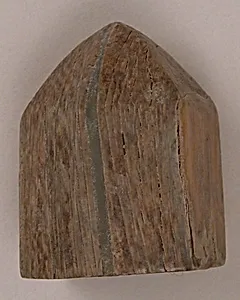
Chess Piece, Pawn
Unknown Artist
8th–12th century
Medium
Ivory or wood(?); carved
Classification
Gaming pieces
Department
Islamic Art
Museum
Metropolitan Museum of Art, New York, NY
Credit
Pfeiffer Fund, 1972
Accession Number
1972.9.21
Rights
Public Domain
Tags
Art Historical Context
This intricately carved chess pawn, dating from the 8th to 12th century, hails from the Islamic world and exemplifies the artistry of early gaming pieces. Crafted from ivory or possibly wood, it reflects the period's masterful carving techniques, where artisans shaped small-scale objects with remarkable precision using knives and chisels. Such pieces were not mere toys but symbols of intellectual leisure, prized in courts and scholarly circles across the Abbasid Caliphate and beyond. Chess, known as *shatranj* in the Islamic tradition, evolved from its Indian origins and flourished in the medieval Middle East, influencing European versions we know today. Pawns like this one represented foot soldiers—the most numerous pieces on the board—embodying strategic humility in gameplay. Their abstract, geometric forms adhered to Islamic aniconism, avoiding human figures while showcasing subtle decorative motifs that hinted at cultural sophistication. Acquired through the Pfeiffer Fund in 1972, this pawn now resides in the Metropolitan Museum of Art's Islamic Art department. It invites visitors to ponder how games bridged cultures, fostering strategy, poetry, and even philosophy in medieval society. A small artifact, yet a window into a vibrant era of innovation.