
Chess Piece: Pawn
19th century
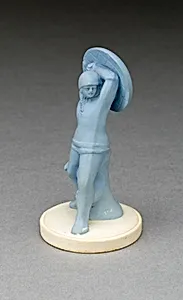
Medium
Stoneware (jasperware)
Dimensions
6 × 3.2 cm (2 3/8 × 1 1/4 in.)
Classification
accessories (object genre)
Department
Applied Arts of Europe
Museum
Art Institute of Chicago
Accession Number
67681
Rights
Public Domain
Art Historical Context
This elegant pawn chess piece, crafted by the Wedgwood Manufactory in the 19th century, exemplifies the refined artistry of English industrial ceramics. Measuring just over two inches tall, the small stoneware figure highlights the manufactory’s mastery of jasperware, a distinctive unglazed stoneware known for its matte finish and delicate white reliefs against colored grounds. Developed by Josiah Wedgwood in the late 18th century, this technique allowed for intricate neoclassical designs that appealed to both aristocratic collectors and an expanding middle-class market. Wedgwood’s innovation lay in combining ancient-inspired motifs with modern production methods, making high-quality decorative art accessible during the height of the Industrial Revolution. As part of a chess set, this pawn would have served both a functional role in gameplay and an ornamental one, reflecting the period’s fascination with classical antiquity and intellectual pursuits like chess. Its presence in the Art Institute of Chicago’s Applied Arts of Europe collection underscores how everyday objects became vehicles for artistic expression and cultural status. Visitors can appreciate the subtle modeling and precision of the jasperware surface, which required skilled craftsmanship despite the piece’s modest size. Such works remind us of Wedgwood’s lasting influence on design, bridging utility and beauty in European decorative arts.
About the Artist
Wedgwood Manufactory
Wedgwood Manufactory, founded on 1 May 1759 by Josiah Wedgwood in Burslem, Staffordshire, England, revolutionized ceramics during the Industrial Revolution. Born into a family of potters, Josiah apprenticed under his elder brother Thomas at the Churchyard Works from age 14, mastering traditional techniques before partnering with Thomas Whieldon from 1754 to 1759, where he honed innovative glazes. ...