
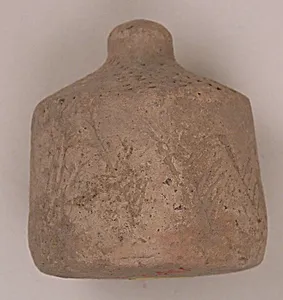
Chess Piece, Probably a Pawn
Unknown Artist
8th–11th century
Medium
Earthenware; unglazed
Dimensions
H. 1 3/8 in. (3.5 cm)
Classification
Gaming pieces
Department
Islamic Art
Museum
Metropolitan Museum of Art, New York, NY
Credit
Pfeiffer Fund, 1972
Accession Number
1972.9.41
Rights
Public Domain
Tags
Art Historical Context
Nestled in the Metropolitan Museum of Art's Islamic Art collection, this modest chess piece—likely a pawndates to the 8th–11th century exemplifies everyday artistry from the early Islamic world. Crafted unglazed earthenware, a humble fired clay common in the region, it stands just 1 3/8 inches tall, perfect for portable gaming sets carried by traders and scholars along Silk Road routes. Its simple form highlights functional design over ornamentation, reflecting the practical beauty of objects made for daily use rather than elite display. Chess, known as *shatranj* in medieval Islamic culture, originated in India and flourished in Persia after the 7th-century Arab conquests. By this era, it had become a beloved pastime among intellectuals, symbolizing strategy, mathematics, and moral lessons—though some religious scholars debated its merits. This pawn, acquired through the Pfeiffer Fund in 1972, offers a tangible glimpse into that vibrant world, where games fostered social bonds and sharpened minds amid the Islamic Golden Age's cultural exchange. Though the artist remains unknown, the piece's survival underscores the enduring appeal of chess, which evolved into the modern game we know today. Visitors, imagine the clack of these earthenware figures on a market stall board— a quiet testament to history's playful side!