
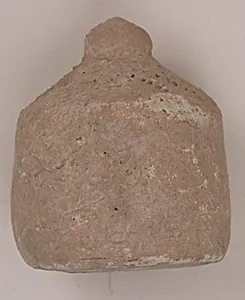
Chess Piece, Pawn
Unknown Artist
8th–11th century
Medium
Earthenware; unglazed
Dimensions
H. 1 3/8 in. (3.5 cm)
Classification
Gaming pieces
Department
Islamic Art
Museum
Metropolitan Museum of Art, New York, NY
Credit
Pfeiffer Fund, 1972
Accession Number
1972.9.46
Rights
Public Domain
Tags
Art Historical Context
Step into the world of medieval Islamic leisure with this delicate earthenware pawn, crafted by an unknown artist between the 8th and 11th centuries. Standing just 1 3/8 inches (3.5 cm) tall, this unglazed gaming piece from the Metropolitan Museum of Art's Islamic Art collection exemplifies the modest yet masterful pottery of the early Islamic era. Made from simple earthenware—fired clay without decorative glazes—it reflects everyday artisanal techniques, likely hand-molded or wheel-thrown, prioritizing functionality over ornamentation. Chess, known as *shatranj* in the Islamic world, originated in India and flourished across Persia and the Abbasid Caliphate during this period. Pawns like this one formed the foot soldiers of the game, symbolizing strategy and intellect in a culture that prized intellectual pursuits alongside faith and poetry. Portable sets such as this allowed games to be played in courts, markets, or caravanserais, fostering social bonds and mental agility. Its survival highlights the cultural significance of gaming pieces in Islamic society, where chess influenced mathematics, literature, and even philosophy. Acquired through the Pfeiffer Fund in 1972, this tiny artifact invites us to ponder the timeless thrill of the game across centuries.