
Chessmen (32)
Unknown Artist
late 18th–19th century
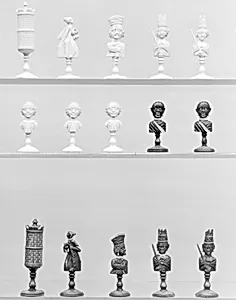
Medium
Bone
Dimensions
Height (each rook): 3 1/2 in. (8.9 cm); Height (each pawn): 2 1/4 in. (5.7 cm)
Classification
Chess Sets
Culture
French, Dieppe
Department
European Sculpture and Decorative Arts
Museum
Metropolitan Museum of Art, New York, NY
Credit
Gift of Gustavus A. Pfeiffer, 1948
Accession Number
48.174.142a–p, aa–pp
Rights
Public Domain
Tags
Art Historical Context
These elegant Chessmen, comprising 32 pieces crafted from bone by an unknown artist in late 18th– to 19th-century France, hail from the renowned ivory-carving workshops of Dieppe, Normandy. Standing at 3½ inches (8.9 cm) for the rooks and 2¼ (5.7 cm) for the pawns, turned bone figures exemplify the precision and delicacy of Dieppe's decorative arts tradition. Bone, a durable and accessible material, served as a practical alternative to ivory, allowing skilled artisans to produce affordable yet refined gaming sets for Europe's growing middle class. Dieppe chessmen like these were highly prized during the Enlightenment and Romantic eras, when chess symbolized intellect and strategy among nobility and bourgeoisie alike. The town's carvers mastered lathe-turning techniques, creating lathe-turned pieces with smooth, symmetrical forms that balanced functionality with subtle ornamentation—often featuring stylized kings, queens, and abstract pawns. This set reflects the cultural fusion of gaming, craftsmanship, and export trade, as Dieppe products reached collectors worldwide. A generous gift to the Metropolitan Museum of Art from Gustavus A. Pfeiffer in 1948, these chessmen now invite visitors to appreciate the artistry behind everyday leisure, bridging history's strategic past with our own.