
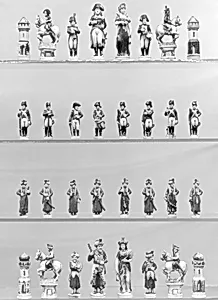
Chessmen (32) and box
Unknown Artist
19th century
Medium
Ivory, leather
Dimensions
Height (each king): 4 3/4 in. (12.1 cm); Height (each pawn): 3 1/8 in. (7.9 cm); Overall (original box): 5 1/2 × 17 1/4 × 12 1/2 in. (14 × 43.8 × 31.8 cm)
Classification
Chess Sets
Culture
French
Department
European Sculpture and Decorative Arts
Museum
Metropolitan Museum of Art, New York, NY
Credit
Gift of Gustavus A. Pfeiffer, 1948
Accession Number
48.174.84a–p, aa–pp, r
Rights
Public Domain
Tags
Art Historical Context
This elegant set of 32 ivory chessmen, accompanied by its original leather box, hails from 19th-century France, a period when chess flourished as a refined parlor game among the European elite. Crafted by an unknown artist, the pieces the meticulous carving techniques of the era: kings stand at 4¾ inches (12.1 cm) tall, while pawns measure 3⅛ inches (7.9 cm), for a balanced, playable set that fits neatly into the box measuring 5½ × 17¼ × 12½ inches (14 × 43.8 × 31.8 cm). The use of ivory—a luxurious, smooth medium prized for its workability—highlights the object's status as a decorative art form, blending functionality with sculptural finesse. In the Department of European Sculpture and Decorative Arts at The Metropolitan Museum of Art, this chess set (gifted by Gustavus A. Pfeiffer in 1948) reflects France's rich tradition of turning everyday amusements into sophisticated confections. Chess sets like this were not mere games but symbols of intellect and leisure, often displayed as conversation pieces in bourgeois homes. The leather box underscores their portability, suggesting travels to salons or country estates where strategy unfolded amid gilded surroundings. Today, these chessmen invite us to ponder the timeless allure of games that transcend borders, preserving a snapshot of 19th-century French craftsmanship and cultural refinement.