
Chest
1800–1820
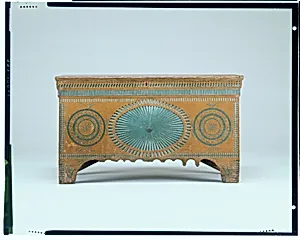
Medium
White pine
Dimensions
21 1/2 x 37 3/4 x 14 3/4 in. (54.6 x 95.9 x 37.5 cm)
Classification
Chest
Culture
American
Department
The American Wing
Museum
Metropolitan Museum of Art, New York, NY
Credit
Gift of Mrs. E. Herrick Low, Nelson Holland, and Hudson Holland, in memory of their mother, Mrs. Nelson Clarke Holland, 1955
Accession Number
55.84
Rights
Public Domain
Art Historical Context
Crafted by Nehemiah Randall between 1800 and 1820, this white pine chest exemplifies the sturdy, practical furniture of early American homes. Measuring 21½ x 37¾ x 14¾ inches, it served as essential storage—likely for blankets, linens, or clothing—in households across the growing United States. Randall, a skilled craftsman from the Federal period, worked in a time when American makers drew inspiration from English traditions while adapting to local materials and tastes. White pine, abundant in New England forests, was the wood of choice for such pieces due to its softness, light weight, and resistance to warping, making it ideal for both construction and intricate joinery. This chest reflects the artisanal techniques of the era, including dovetailed drawers and simple, functional forms that prioritized utility over ornate decoration, hallmarks of vernacular American design. Now housed in The Metropolitan Museum of Art's American Wing, this chest—gifted in 1955 in memory of Mrs. Nelson Clarke Holland—offers a tangible link to everyday life in the early republic. It highlights the unsung role of regional woodworkers like Randall in shaping a distinctly American material culture, blending necessity with quiet craftsmanship.