
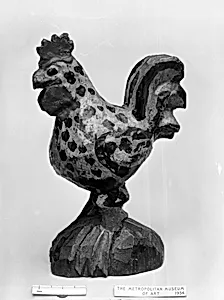
Rooster
1865–90
Medium
White pine
Dimensions
5 1/4 in. H. (13.34 cm)
Classification
Sculpture
Culture
American
Department
The American Wing
Museum
Metropolitan Museum of Art, New York, NY
Credit
Gift of Mrs. Robert W. de Forest, 1933
Accession Number
34.100.173
Rights
Public Domain
Tags
Art Historical Context
Behold the spirited *Rooster* carved by Wilhelm Schimmel, masterful exponent of 19th-century American folk. Dating from 1865–90, this diminutive white pine sculpture stands just 5¼ inches tall, capturing the bird's proud strut and alert gaze with lively, expressive carving. Housed in The American Wing of the Metropolitan Museum Art—a gift from Mrs Robert W. de Forest 1933—it exemplifies the Pennsylvania German whittling tradition, where wood scraps were transformed into charming, narrative objects. Schimmel, a self-taught carver from the Pennsylvania Dutch community, gained fame for his whimsical animal figures, particularly roosters, which symbolized vigilance, strength, and rural life in folk culture. Whittled with simple pocket knives, these works showcase bold contours, dynamic poses, and a naive charm that prioritizes emotional vitality over refined technique. The use of white pine, soft and readily available, allowed for intricate detailing despite the modest scale, reflecting the resourcefulness of immigrant artisans in post-Civil War America. This piece invites us to appreciate the unpretentious beauty of folk art, bridging everyday life and artistic expression. Gaze upon it and feel the crow of Americana echoing through time.