
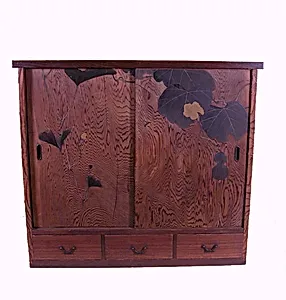
Chest with Decoration of Gourd Vine
ca. 1878
Medium
Wood with black and gold lacquer
Dimensions
H. 25 1/2 in. (64.8 cm); W. 28 3/4 in. (73 cm); D. 10 1/8 in. (25.7 cm)
Classification
Lacquer
Culture & Period
Japan · Meiji period (1868–1912)
Department
Asian Art
Museum
Metropolitan Museum of Art, New York, NY
Credit
The Harry G. C. Packard Collection of Asian Art, Gift of Harry G. C. Packard, and Purchase, Fletcher, Rogers, Harris Brisbane Dick, and Louis V. Bell Funds, Joseph Pulitzer Bequest, and The Annenberg Fund Inc. Gift, 1975
Accession Number
1975.268.181
Rights
Public Domain
Tags
Art Historical Context
Behold the *Chest with Decoration of G Vine* by Shibata Zeshin, crafted around 1878 during Japan's Meiji period (1868–1912). This exquisite wooden chest, measuring about 25½ inches tall, showcases Zeshin's mastery of lacquerware, transforming a functional storage piece into a work of art. Adorned with intricate vines in black (roirō) and gold lacquer, the design evokes the organic grace of climbing gourds, symbols of abundance and longevity in Japanese culture. Shibata Zeshin (1807–1891) was a pioneering lacquer artist who blurred the lines between urushi (lacquer) and traditional ink painting, earning acclaim as one of Japan's "last great lacquer masters." During the Meiji era—a time of rapid Westernization—Zeshin preserved and innovated native crafts, using techniques like gold powder sprinkling and meticulous layering to achieve luminous depth and realism. His works often mimicked sumi-e brushstrokes in lacquer, elevating everyday objects to collector's treasures. Housed in the Metropolitan Museum of Art's Asian Art Department as part of the Harry G. C. Packard Collection, this chest highlights lacquer's enduring prestige. Visitors, imagine opening it to reveal hidden stories woven in gold— a testament to Meiji Japan's blend of tradition and artistry. (198 words)
About the Artist
Shibata Zeshin · 1807–1891
Japanese, 1807–1891