
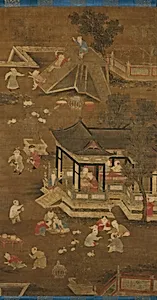
元末明初 佚名 絹本設色 嬰戯圖 軸|Children playing in the palace garden
late 13th–15th century
Medium
Hanging scroll; ink and color on silk
Dimensions
Image: 54 7/8 x 30 in. (139.4 x 76.2 cm) Overall with mounting: 113 1/2 x 36 1/2 in. (288.3 x 92.7 cm) Overall with knobs: 113 1/2 x 39 in. (288.3 x 99.1 cm)
Classification
Paintings
Culture & Period
China · late Yuan (1271–1368)–early Ming (1368–1644) dynasty
Department
Asian Art
Museum
Metropolitan Museum of Art, New York, NY
Credit
Purchase, The Dillon Fund Gift, 1987
Accession Number
1987.150
Rights
Public Domain
Tags
Art Historical Context
This enchanting hanging scroll, titled *Children Playing in the Palace Garden* (*Yingxi tu*), dates to the transitional period from the late Yuan dynasty (127–1368) to the early Ming dynasty (136–1644). Created by an unidentified artist, it exemplifies the refined tradition of Chinese painting on silk using ink and vibrant colors (*jianben shese*). Measuring nearly 55 by 30 inches in its image area, the work was designed for display in elite homes or palaces, unrolling to reveal intimate scenes during gatherings. The composition captures young children at play amid lush palace gardens, surrounded by toys, games, and playful pursuits. Such motifs were popular in Yuan-Ming art, symbolizing innocence, familial joy, and the prosperity of courtly life during a time of dynastic change—from Mongol Yuan rule to the culturally revitalized Ming era. The delicate silk medium allowed for luminous colors and fine details, highlighting the artist's mastery of *gongbi* (meticulous brushwork) to evoke a sense of harmonious leisure. Acquired by The Metropolitan Museum of Art in 1987 through The Dillon Fund Gift, this scroll offers a window into everyday imperial whimsy, reminding us how art preserved fleeting moments of childhood delight across centuries.