
Pleasure Quarters
18th–19th century
Medium
Hanging scroll; ink and color on silk
Dimensions
40 x 12 3/16 in. (101.6 x 30.9 cm)
Classification
Paintings
Culture & Period
Japan · Edo period (1615–1868)
Department
Asian Art
Museum
Metropolitan Museum of Art, New York, NY
Credit
Charles Stewart Smith Collection, Gift of Mrs. Charles Stewart Smith, Charles Stewart Smith Jr., and Howard Caswell Smith, in memory of Charles Stewart Smith, 1914
Accession Number
14.76.48
Rights
Public Domain
Tags
Art Historical Context
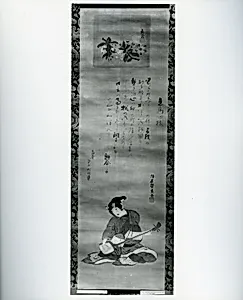
Created during Japan’s Edo period (1615–1868), *Pleasure Quarters* captures the lively atmosphere of the entertainment districts that flourished in cities like Edo (modern Tokyo). These urban spaces, often called “floating worlds,” were centers of, theater, and refined social interaction, where courtesans and entertainers played a prominent role in cultural life. Suga Mitsusada’s hanging scroll portrays women with musical instruments, evoking the graceful performances that defined these quarters. Executed in ink and color on silk, the work follows a long-standing Japanese tradition of hanging scrolls designed for seasonal display in the tokonoma alcove. The delicate medium allows for luminous hues and fine detail, qualities well suited to depicting the elegant costumes and instruments associated with the pleasure quarters. As a gift to the Metropolitan Museum from the Charles Stewart Smith family, the painting offers today’s visitors an intimate glimpse into the refined tastes and artistic sensibilities of late Edo Japan.