
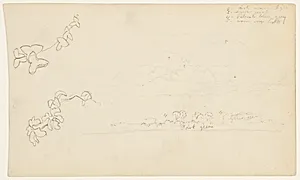
Chimborazo from the Rio Guayas, Ecuador
Classification
landscapes
Department
Smithsonian Collection
Museum
Smithsonian American Art Museum
Credit
Gift of Louis P. Church
Accession Number
1917-4-823
Rights
Public Domain
About this artwork
Research in Progress
Art Historical Context
Frederic Edwin Church, leading figure of the Hudson River School, captured the majestic Chimborazo volcano in this 1857 landscape, viewed from the Rio Guayas in Ecuador. during Church's second expedition to South America, the work reflects his passion for the world's most dramatic natural wonders. Chimborazo, Ecuador's highest peak at over 20,600 feet, symbolized sublime beauty and scientific intrigue in the 19th century, inspired explorer Alexander von Humboldt's influential writings. Church's on-site sketches like this one were vital to his process, serving as studies for larger studio canvases such as his famed *Heart of the Andes*. Though the medium is unknown, these works showcase his meticulous technique—precise details, luminous skies, and atmospheric effects that evoke the divine in nature. As part of the Smithsonian American Art Museum's collection, gifted by Church's son Louis P. Church, it highlights the artist's role in elevating American landscape painting to international acclaim. This piece invites visitors to ponder 19th-century America's expanding worldview, blending Romantic awe with scientific curiosity amid the era's explorations. (178 words)