
唐子遊び図扇面|Chinese Boys at Play
first half 16th century
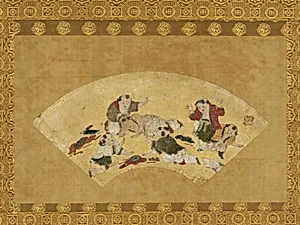
Medium
Folding fan mounted as a hanging scroll; ink, color, gold, and mica on paper
Dimensions
Image (fan only): 9 1/8 × 18 1/2 in. (23.2 × 47 cm) Overall with mounting: 45 × 26 in. (114.3 × 66 cm) Overall with knobs: 45 × 28 1/4 in. (114.3 × 71.8 cm)
Classification
Paintings
Culture & Period
Japan · Muromachi period (1392–1573)
Department
Asian Art
Museum
Metropolitan Museum of Art, New York, NY
Credit
Purchase, Bequest of Mary Stillman Harkness, by exchange, 2022
Accession Number
2022.343
Rights
Public Domain
Art Historical Context
Step into the playful world of Kano Motonobu's *Chinese Boys at Play*唐子遊び図扇面 a gem from Japan's Muromachi period (1392–1573). in the first half of 16th century, work by the master of the Kano school—a pioneering professional painting lineage—originally graced a folding fan before being elegantly mounted as a hanging scroll Measuring about 9 x 18 inches in its fan form, it showcases Motonobu's skill in ink, vibrant colors, gold flecks, and shimmering mica on paper, transforming a portable accessory into a luxurious wall display. The scene bursts with energy: Chinese-style boys (karakara or tangzi) frolic in joyful abandon, a beloved motif evoking childhood innocence and harmony. Motonobu's Kano style blends bold Chinese ink techniques with Japanese elegance, using dynamic compositions and metallic accents for depth and sparkle—hallmarks of screens and scrolls commissioned by samurai elites and temples. This fan's repurposing highlights Muromachi ingenuity, when everyday objects became high art amid cultural exchange with China. Recently acquired by The Metropolitan Museum of Art through a generous bequest, this piece invites us to ponder leisure's timeless charm. Spot the mica's subtle glow under gallery lights—it's a delightful nod to the era's opulent tastes!
About the Artist
Kano Motonobu 狩野元信 (Japanese) · 1477 –1559
Japanese, 1477–1559