
Chinese Figures
Classification
printed, dyed & painted textiles
Department
Smithsonian Collection
Museum
Smithsonian American Art Museum
Credit
Gift of Mrs. William D. Frismuth
Accession Number
1911-7-6
Rights
Public Domain
About this artwork
Research in Progress
Art Historical Context
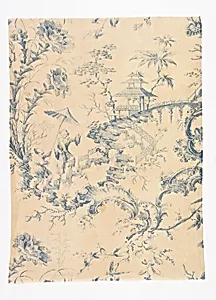
"Chinese Figures" is a captivating textile from the Bromley Hall workshop in Middlesex, England, produced between 1774 and 1811. Attributed to Bromley Hall1712–1763), likely the founder of this esteemed printing operation, the piece falls within the classification of printed, dyed, painted textiles—a technique that combined block-printing, resist-dyeing, and hand-painting to create vibrant, intricate designs on fabric. Though the exact medium remains under study, these methods were hallmarks of Britain's burgeoning textile industry during the late 18th and early 19th centuries, often used for fashionable furnishings like curtains and upholstery. The artwork embodies the chinoiserie style, Europe's whimsical interpretation of Chinese art and culture, fueled by expanding trade with Asia via the East India Company. Delicate figures in traditional robes evoke an exotic fantasy world, blending Eastern motifs with Western craftsmanship. This reflects the era's Enlightenment-era fascination with global aesthetics, transforming imported silks and porcelains into accessible printed cottons for British homes. Now part of the Smithsonian American Art Museum's collection—gifted by Mrs. William D. Frismuth—"Chinese Figures" highlights the fusion of commerce, artistry, and cultural exchange. As research continues, it invites visitors to ponder how everyday textiles wove stories of distant lands into the fabric of British life.