
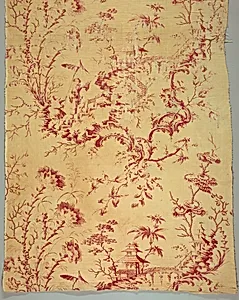
Chinese Figures
Medium
printed, dyed & painted textiles
Classification
printed, dyed & painted textiles
Department
Smithsonian Collection
Museum
Smithsonian American Art Museum
Credit
Gift of Harold M. Bailey
Accession Number
1960-79-17
Rights
Public Domain
About this artwork
Research in Progress
Art Historical Context
"Chinese Figures" is a captivating example of 18th-century textiles created by Bromley Hall (2–1763), dated to 1765 and housed in the Smithsonian American Art's collection. This piece, gifted by Harold M. Bailey, exemplifies printed, dyed, and painted—a labor-intensive medium blending block-printing, resist-dyeing, and hand-painting techniques Though Hall passed away two years prior, such works were often completed in workshops by apprentices or collaborators, reflecting the collaborative nature of textile production in Georgian England. The title hints at chinoiserie, the fashionable European fascination with Chinese aesthetics during the Rococo era. Elaborate scenes of Chinese figures would have adorned fashionable homes as curtains, bedhangings, or upholstery, evoking exotic luxury amid Britain's growing trade with Asia. English textile makers like those associated with Hall innovated to rival imported Indian chintzes, which had been banned in 1721 to protect local industries—sparking a boom in domestic printed cottons. Today, this artwork offers a window into 18th-century tastes and craftsmanship, bridging art and everyday life. Ongoing research promises deeper insights into its creation and motifs, making it a highlight for visitors exploring the intersections of global trade, design, and decoration.