
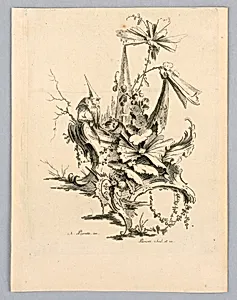
Chinoiserie Vignette with Singe
mid- 18th–late 18th century
Medium
Classification
Department
Smithsonian Collection
Museum
Smithsonian American Art Museum
Credit
Gift of Eleanor and Sarah Hewitt
Accession Number
1931-94-692
Rights
Public Domain
About this artwork
Research in Progress
Art Historical Context
**Chinoiserie Vignette Singe** by Alexis Peyrotte (French, 1699–1769) captures the whimsical allure of 18th European fascination with the East. Created as a print in the mid- to late 1700s, this delicate vignette features a playful monkey—or *singe* in French—amidst ornate chinoiserie motifs, blending imagined Chinese aesthetics with French decorative flair. Peyrotte a skilled painter and designer, was renowned for his intricate patterns that adorned luxury furniture and interiors for the French aristocracy during the Rococo era. Chinoiserie exploded in popularity across Europe in the 18th century, fueled by trade with Asia and a taste for exotic escapism. Prints like this one served as affordable models for artisans, disseminating fanciful scenes of pagodas, flora, and fanciful creatures to inspire wallpapers, ceramics, and textiles. Peyrotte's elegant lines and asymmetrical compositions reflect the lighthearted, asymmetrical elegance of Rococo, turning the print into a bridge between fine art and everyday ornament. Now in the Smithsonian American Art Museum's collection, gifted by collectors Eleanor and Sarah Hewitt, this work awaits further research, highlighting ongoing discoveries in decorative arts history. It invites visitors to ponder how global curiosities shaped Western design, one mischievous monkey at a time. (198 words)