
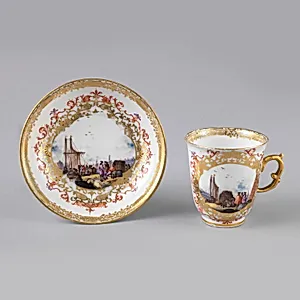
Chocolate or Coffee Cup and Saucer
Classification
ceramics
Department
Smithsonian Collection
Museum
Smithsonian American Art Museum
Credit
Bequest of Erskine Hewitt
Accession Number
1938-57-437-a,b
Rights
Public Domain
About this artwork
Research in Progress
Art Historical Context
Nestled in the Smithsonian American Art Museum's collection this *Chocolate or Coffee Cup anducer* from the Meissen Porcelain Manufactoryactive since 1710) dates to 1735–1745. Meissen, based in Germany, holds the distinction of being Europe's first producer of true hard-paste, a breakthrough that rivaled prized Chinese imports. Founded under the patronage of Augustus the Strong, the manufactory revolutionized ceramics by mastering a durable, translucent material fired at high temperatures, enabling intricate designs previously impossible in Europe. Crafted during the early Rococo era, this delicate piece reflects the opulence of 18th-century aristocratic life. Chocolate and coffee, exotic luxuries from the New World and Ottoman Empire, became fashionable beverages among the elite, spurring demand for elegant tableware. Meissen's ceramics often featured elaborate gilding, floral motifs, and figural scenes, showcasing virtuoso techniques like painting over glaze and precise molding—hallmarks of their crossed-swords mark of authenticity. Bequeathed by collector Erskine Hewitt, this saucer and cup exemplify Meissen's enduring legacy in luxury goods. Though research continues, it invites us to savor the artistry behind everyday indulgence, bridging craftsmanship and cultural exchange in the Age of Enlightenment.