
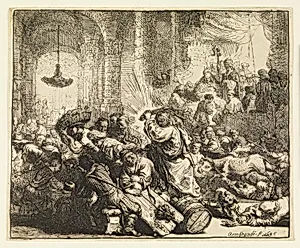
Christ Driving the Money-Changers from the Temple
Classification
figures
Department
Smithsonian Collection
Museum
Smithsonian American Art Museum
Credit
Gift of Leo Wallerstein
Accession Number
1950-5-1
Rights
Public Domain
About this artwork
Research in Progress
Art Historical Context
In the heart of Rembrandt Harmensz van Rijn's early career, *Christ Driving the Money-Ch from the Temple* (5) captures a pivotal biblical moment from the Gospel of. The Dutch master's dynamic composition depicts Jesus overturning the tables of merchants in the sacred space of the Jerusalem Temple, a dramatic act of righteous fury against corruption and commercialization of faith. Created when Rembrandt was just 29, this work exemplifies his emerging Baroque style, renowned for its intense emotional depth and masterful interplay of light and shadow—chiaroscuro—that draws viewers into the chaos and fervor of the scene. As a history painting focused on figures, it reflects the 17th-century Dutch Golden Age's fascination with moral and religious narratives, blending spiritual fervor with human drama. Rembrandt revisited this theme multiple times throughout his life, evolving his technique, but this early version showcases his innovative approach to movement and expression, making the figures feel vividly alive. Though the medium remains under research, its classification highlights Rembrandt's skill in portraying crowded, gestural crowds teeming with outrage and redemption. Now a cherished gift to the Smithsonian American Art Museum from Leo Wallerstein, this piece invites visitors to ponder timeless themes of purity and reform, bridging 17th-century Amsterdam with ancient scripture in a single, electrifying glance.