
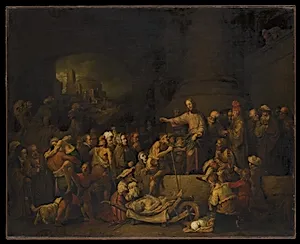
Christ Healing the Sick
Medium
Oil on canvas
Dimensions
35 1/8 x 41 3/8 in. (89.2 x 105.1 cm)
Classification
Paintings
Department
European Paintings
Museum
Metropolitan Museum of Art, New York, NY
Credit
Gift of William H. Webb, 1885
Accession Number
85.9
Rights
Public Domain
Tags
Art Historical Context
In the heart of the Metropolitan Museum of's European Paintings collection hangs *Christ Healing the Sick* (1742), a vibrant oil-on-canvas masterpiece by German Rococo artist Christian Wilhelm Ernst. This 35-by-41-inch work captures a biblical miracle from the Gospels, where Jesus tends to a crowd of afflicted men and women, their faces etched with hope and suffering. Adding a touch of everyday warmth, Dietrich includes dogs among the throng—perhaps symbolizing faithful companionship or the bustle of life amid divine intervention. The oil medium shines here, allowing Dietrich's masterful glazing techniques to create luminous skin tones and dynamic light that draws viewers into the compassionate scene. Dietrich (1712–1774), a Dresden-based painter influenced by Dutch masters like Rembrandt, blended Rococo elegance with religious narrative. Created during the opulent mid-18th century, when Europe's courts favored intricate, emotive compositions, this painting reflects the era's fascination with human drama and faith. Its intimate scale suits private devotional viewing, yet its lively figures and subtle storytelling make it universally engaging. A generous gift to the Met in 1885 by William H. Webb, the work endures as a testament to Rococo's ability to humanize sacred stories, inviting us to ponder healing—in body, spirit, and society.
About the Artist
Christian Wilhelm Ernst Dietrich · 1712–1774
Christian Wilhelm Ernst Dietrich (1712–1774) was a German painter and etcher of considerable versatility, celebrated in his own time for a chameleonic ability to work convincingly in the manner of the great Dutch and Flemish masters of the preceding century. Born in Weimar, he received early training from his father and later studied under Alexander Thiele in Dresden, the city with which his caree...