
Christ's Descent into Hell
Medium
Oil on wood
Dimensions
21 x 46 in. (53.3 x 116.8 cm)
Classification
Paintings
Department
European Paintings
Museum
Metropolitan Museum of Art, New York, NY
Credit
Harris Brisbane Dick Fund, 1926
Accession Number
26.244
Rights
Public Domain
Tags
Art Historical Context
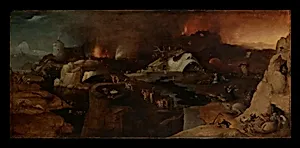
Hieronymus Bosch’s *Christ’s Descent into Hell* captures a dramatic moment from Christian tradition known as the Harrowing of Hell, in which Christ descends to liberate righteous souls. Painted in oil on wood during the late fifteenth or early sixteenth century, the panel reflects the Northern Renaissance fascination with vivid moral and religious storytelling. Bosch, a Dutch master celebrated for his intricate, fantastical imagery, uses this compact format to explore themes of salvation and damnation with remarkable detail. The composition is alive with Bosch’s signature elements: flickering flames, shadowy figures, and symbolic creatures such as owls, which often represented evil or spiritual blindness in his work. These details invite viewers to look closely, rewarding patient observation with layers of meaning about the consequences of sin and the promise of redemption. Oil paint allowed Bosch to achieve luminous effects and fine textures, heightening the contrast between divine light and infernal darkness. Today the painting serves as a powerful reminder of medieval and early modern concerns with the afterlife, encouraging contemporary audiences to reflect on morality and faith through Bosch’s uniquely imaginative lens.
About the Artist
Hieronymus Bosch · 1450–1516
Considered the most distinctive and idiosyncratic of 15th-century Netherlandish artists, he produced a body of work remarkable for its depiction of fantastic, often diabolic, creatures, generally moralizing representations of the consequences of sin and folly. He was the first European artist to give free rein to almost uncontrolled association, formal inventivity, and free choice of ideas. Commen...