
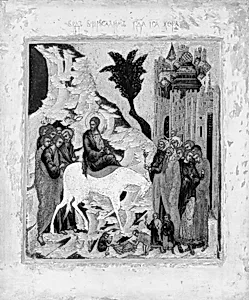
Christ's Entry into Jerusalem
Medium
Tempera on wood
Dimensions
12 1/4 x 10 1/4 in. (31.1 x 26 cm)
Classification
Paintings
Department
European Paintings
Museum
Metropolitan Museum of Art, New York, NY
Credit
Gift of Humanities Fund Inc., 1972
Accession Number
1972.145.21
Rights
Public Domain
Tags
Art Historical Context
Behold *Christ's Entry into Jerusalem*, poignant tempera on wood panel by an anonymous Russian painter, now housed in the Metropolitan Museum of Art European Paintings department. This intimate work, measuring just 12¼ x 10¼ inches, captures the biblical moment of Jesus's triumphal arrival in Jerusalem on Palm Sunday. Christ, humbly mounted on a donkey (depicted among horses in the composition), is greeted by adoring crowds waving palm branches, symbolizing hope, humility, and the dawn of Holy Week in Christian tradition. Crafted in tempera—a labor-intensive medium of powdered pigments mixed with egg yolk on wood—the painting exemplifies Russian iconographic techniques. These small-scale icons were devotional treasures in Orthodox homes and churches, their vivid colors and stylized figures designed to inspire spiritual contemplation rather than realistic portrayal. The flattened perspective and symbolic details, like flowing garments and expressive gestures, reflect Byzantine influences that shaped Russian art for centuries. Though the date remains unknown, this gifted piece (Humanities Fund Inc., 1972) offers a window into Russia's rich religious heritage, where such icons served as portals to the divine, blending artistry with faith for everyday worshippers. A gem for visitors seeking the soul of Eastern European spirituality!
About the Artist
Russian Painter
The Russian Painter, an anonymous master active possibly in the 16th century, embodies the profound spiritual tradition of Russian iconography. Little is known about their early life, training, or personal background, as is common for many unattributed works from this era, when artists often labored in workshops without individual recognition. Working in the Russian school tradition, this painter ...