
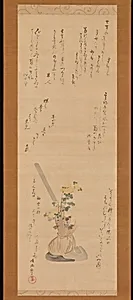
Chrysanthemum and Hoe
18th–19th century
Medium
Hanging scroll; ink and color on silk
Dimensions
36 3/8 x 13 1/16 in. (92.4 x 33.2 cm)
Classification
Paintings
Culture & Period
Japan · Edo period (1615–1868)
Department
Asian Art
Museum
Metropolitan Museum of Art, New York, NY
Credit
The Harry G. C. Packard Collection of Asian Art, Gift of Harry G. C. Packard, and Purchase, Fletcher, Rogers, Harris Brisbane Dick, and Louis V. Bell Funds, Joseph Pulitzer Bequest, and The Annenberg Fund Inc. Gift, 1975
Accession Number
1975.268.128
Rights
Public Domain
Tags
Art Historical Context
**Chrysanthemum Hoe** by Kuboman (1757–1820) is a delicate hanging scroll from Japan's Edo period (16151868), a time of relative peace and cultural flourishing when artists like Shunman blended traditional ink painting with playful, poetic motifs. Created in the late 18th or early 19th century, this work captures a chrysanthemum—Japan's emblem of autumn, longevity, and imperial elegance—alongside a humble hoe,oking themes of nature's beauty intertwined with everyday labor. Shunman, a versatile ukiyo-e master known for woodblock prints and surimono commissions, showcases his skill in literati-style painting, bridging elite aesthetics with accessible charm. Rendered in ink and light color on silk, the scroll's 36 3/8 x 13 1/16 in. format invites intimate viewing when unrolled, a traditional Japanese practice for seasonal display. The subtle layering of washes and precise brushwork highlights the flower's vibrant petals against the tool's earthy simplicity, reflecting Edo-era appreciation for haiku-like contrasts in wabi-sabi impermanence. Part of the Metropolitan Museum of Art's Asian Art collection, gifted through The Harry G. C. Packard Collection in 1975, it exemplifies how floral subjects symbolized refinement amid urban prosperity. Step closer to admire how Shunman's composition draws the eye from petal to prong, reminding us of life's quiet harmonies.
About the Artist
Kubo Shunman · 1757–1820
Japanese, 1757–1820