
窪俊満筆 大田南畝賛 石川雅望賛 浅草庵市人賛 四方真顔賛 時鳥図|Hototogisu
early 19th century
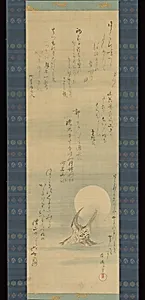
Medium
Hanging scroll; ink and color on silk
Dimensions
Image: 36 1/16 × 11 7/8 in. (91.6 × 30.2 cm) Overall with mounting: 72 1/4 × 19 3/16 in. (183.5 × 48.8 cm)
Classification
Paintings
Culture & Period
Japan · Edo period (1615–1868)
Department
Asian Art
Museum
Metropolitan Museum of Art, New York, NY
Credit
Mary and Cheney Cowles Collection, Gift of Mary and Cheney Cowles, 2019
Accession Number
2019.420.28
Rights
Public Domain
Tags
Art Historical Context
This exquisite hanging scroll, titled *Hototogisu* (Cuckoo), captures the delicate form of the Japanese cuckoo bird revered in poetry for heralding summer and evoking wistful longing. Painted by Kubo Shunman1770–1844?), a versatile Edo-period artist known for his ukiyo-e prints and refined paintings, it features ink and light color on silk. The work is enriched by poetic inscriptions (*zan*) from luminaries like Ōta Nanpo, a leading kyōka poet, Magao (Yomo Magao, or Rokujuen), Asakusaan Ichindo, and Yomo Magao, transforming it into a collaborative tribute among literati friends. Dating to the early 19th century during Japan's Edo period (1615–1868), this 36-by-12-inch image exemplifies the hanging scroll format, ideal for intimate display in homes or during poetry gatherings. Shunman's technique blends precise ink lines with subtle washes, highlighting the bird's poised elegance against a minimalist background—a nod to both native bird-and-flower traditions and literati influences from China. A gift to the Metropolitan Museum of Art from the Mary and Cheney Cowles Collection in 2019, *Hototogisu* reflects the vibrant cultural circles of Edo Tokyo, where art, poetry, and nature intertwined. Visitors will appreciate how it immortalizes fleeting seasonal beauty, inviting reflection on Japan's enduring waka and haikai heritage.
About the Artist
Yomo Magao|Rokujuen 六樹園|Kubo Shunman|Asakusaan Ichindo|Ōta Nanpo (Japanese| |Japanese|Japanese|Japanese) · 1753 |1753 |1757 |1755 |1749 –1829 |1830 |1820 |1820 |1823
Japanese, 1753–1829|1753–1830|Japanese, 1757–1820|Japanese, 1755–1820|Japanese, 1749–1823